

|
Quantity
|
Out of stock
|
||
|
|
|||
|
|
|||
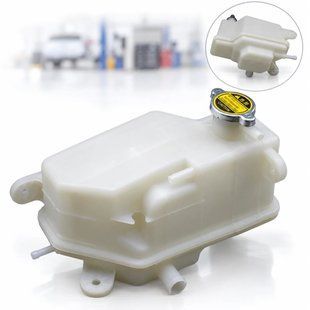
Expansion tanks should be chosen by the real job on the vehicle, not by the category name alone. An expansion tank is chosen by body shape, hose outlets, sensor position and mounts because similar-looking tanks often fit differently. This approach reduces the risk of returns and makes it clear what data is needed before buying.
How to choose without unnecessary returns
Before ordering, follow the part in the vehicle: where it sits, how it is held, what it connects to and what happens if size or fit is wrong. For expansion tanks, the old sample, installation photo and vehicle data are especially useful.
- Compare tank shape and hose outlet layout. A similar body can still fail to fit because a hose exits in another direction.
- Look at the sensor and cap area. If the design differs, the cooling system may leak or work incorrectly.
- Inspect the mounting points. The tank should sit without stress, otherwise the plastic may crack after heating.
- Watch the coolant level after fitting. The first drives can reveal a leak or trapped air quickly.
Common problems and the right solution
- The tank looks similar but a hose outlet points the wrong way. Check outlet layout, sensor place and mounting shape before ordering.
- A leak appears after installation. Hose tension, cap fit or seating may be the reason; install the tank without stress and check joints after warm-up.
- The cooling system works unstably. Make sure the tank design, cap and sensor place match the vehicle.
Where to check next before ordering
These links are meant to prevent guessing by photo or title. Open the right section when you need to confirm what the part does, how it mounts, its size, connector or installation place before ordering.
- Auto parts - return to the main auto parts section if you are not sure which system the part belongs to; it helps separate fasteners, exhaust parts, ignition parts, sensors and replaceable items.
- Auto fasteners - open this section when you need a clip, screw, nut, rivet or plug for a panel, trim piece or body element; check the shape and seat size before ordering.
- Exhaust systems - use it when the issue is exhaust noise, a flex pipe, pipe connection or sealing, not a body fastener.
- Ignition system - open it if the problem appears during starting, misfires or unstable engine work; then move to spark plugs and check ignition parameters.
Delivery and order details
For an expansion tank, photograph the old body, hose outlets and mounts in advance. After delivery, compare outlet layout and sensor place, then check coolant level after installation.
FAQ
Can I choose Expansion tanks by vehicle make only?
No. Make and model help narrow the search, but auto parts also depend on installation place, dimensions, part number, side, connector or fastener type.
What if the old part is no longer available?
Use photos of the installation place, seat dimensions, vehicle data and product-card details. If important data is missing, confirm fitment before payment.
Why can a similar-looking part fail to fit?
Similar parts may differ by height, thread, diameter, retainer shape, pin count or hose direction. These differences often become obvious only during installation.