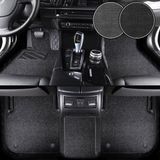
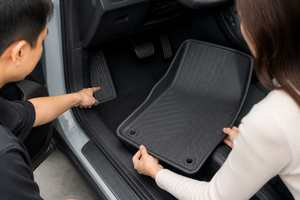
In short: EVA, rubber and textile car mats serve different needs. For mud, water, countryside trips and active family use, rubber or EVA with raised edges is usually more practical. For calm city driving and a mostly dry cabin, textile mats can work well. For a crossover, check car mats by vehicle fit, driver-side shape, mounting points and a separate trunk mat.
Most mat-buying mistakes start with choosing by photo instead of by car and use case. A mat can look good but leave gaps near the footrest, slide near the pedals, miss the original mounting points or let dirt collect around the edges. In a crossover this matters even more because the car is used for city driving, family trips, shopping, countryside roads and luggage.
EVA, rubber or textile: the difference
| Material | Best use | What to check |
|---|---|---|
| EVA | Light mat with cells for sand, dust and some water | Shape, mounting points, edge finish, raised edge and cleaning convenience |
| Rubber | Rain, snow, dirt roads, kids, pets and frequent wet shoes | Raised edge, smell, thickness, flexibility, texture and driver-side fixation |
| Textile | City use, cleaner cabin, more visual comfort and less wet dirt | Pile density, backing, heel pad, mounting points and drying after moisture |

When EVA is a better choice
EVA mats are often chosen for their look, low weight and cell structure. The cells hold fine sand, dust and part of the moisture, so dirt spreads less across the cabin. This is useful for daily city driving with occasional beach, countryside, dusty parking or wet-shoe situations.
Do not stop at the word "EVA" in the product name. Check the pattern for your exact model, mounting points, driver-side area, footrest coverage, edge near the door sill and raised edge height. Universal mats require especially careful measurement.
When rubber is a better choice
Rubber mats are practical when water, mud, road salt, sand or kids' footprints regularly enter the cabin. A raised edge helps keep liquid on the mat, and the surface is easier to wash quickly. For winter, rain, countryside trips and active family use, rubber is often the calmest choice.
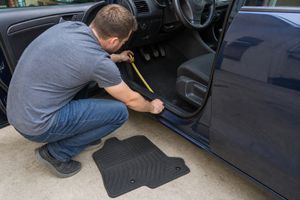
The driver area is the key check. The mat must not slide forward, curl under the pedals or catch on shoes. Compare original mounting points, pedal-area shape, material thickness and surface texture.
Choose mats by real use, floor shape, mounting points and what you carry in the cabin and trunk, not by material name alone.
When textile is a better choice
Textile mats make sense when the car is mostly used in the city, the cabin should look more refined and wet dirt is limited. They look softer and feel quieter underfoot, but they need more regular cleaning and time to dry after moisture.
Check pile density, backing, heel pad, edge finish and fixation. If the driver often enters the car with wet shoes, unprotected textile may lose its look faster.
Trunk mat: when it is needed separately
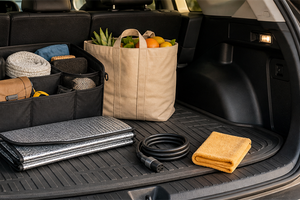
In a crossover, the trunk often works like a second cabin. It carries a stroller, bags, tools, shoes after outdoor trips, a compressor, sports gear and seasonal items. That is why cabin mats and trunk protection should be chosen together, not as separate afterthoughts.
For the trunk, check cargo-floor shape, raised edges, access to the lower compartment, compatibility with organizers and easy washing. If the car is used for family or countryside trips, a trunk mat is often needed earlier than expected. A trunk organizer also helps keep smaller items from moving around.

How to choose by make and model
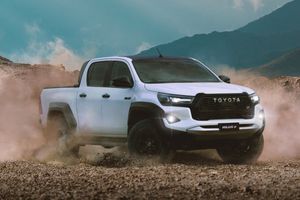
Model-specific mats are safer to choose by vehicle, not only by material. For Toyota, start with Toyota mats; for Audi, start with Audi mats. This makes it easier to check generation, body, year, steering side, mounting points and driver-side fit.
If no exact model-specific option is available, universal mats should be considered only after measurement. Check length, width, cutouts, raised edge height, pedal area and reliable fixation.
Common mistakes
- Choosing mats only by material without checking the vehicle pattern.
- Assuming "for crossover" means exact fit in a specific trunk.
- Ignoring driver-side mounting points.
- Choosing a raised edge that interferes with pedals or entry.
- Buying textile mats for constant wet dirt and expecting rubber-like care.
- Forgetting the trunk even though it carries the dirtiest items.
FAQ
Which mats are best for a crossover?
EVA or rubber are often practical, but the final choice depends on driving habits, cabin floor shape, mounting points and whether a separate trunk mat is needed.
Is EVA better than rubber?
Not always. EVA is convenient for sand and fine dirt. Rubber handles more water, snow, road salt and heavy dirt.
Can I buy universal mats?
Yes, if size, shape, fixation and the driver-side area have been checked. Universal does not mean exact fit.
Do I need a trunk mat?
Yes, if you carry bags, a stroller, shoes, tools, groceries, canisters or outdoor gear. Cabin mats do not protect the trunk floor.