When access to the stationary power grid is limited, a vehicle can become a full-fledged mini-power station for your apartment or house. However, using equipment designed for automotive use inside a residential area requires following specific safety rules and understanding technical nuances.
In this article, we will explain how to set up a functional "battery + inverter" system for home use to provide power for the internet, lighting, and gadget charging.
Choosing a Battery for Indoor Use
This is the most critical point. Not every car battery is suitable for home use. The main issue with classic flooded (WET) batteries is the emission of electrolyte vapors during operation and charging.
- AGM and GEL Batteries: The ideal choice for home use. They are sealed, do not emit harmful fumes, and handle deep discharges much better.
- Classic Car Batteries: Acceptable only if there is excellent ventilation or when used on a balcony. Their operation in bedrooms and closed rooms is not recommended.

How Long Will the Charge Last? Simple Calculation Formula
To understand how long your equipment will run, you can use a simple formula:
T (time in hours) = (Battery Capacity in Ah × 12V × 0.8) / Load in Watts
The 0.8 coefficient accounts for the inverter's efficiency and the need to leave a charge reserve (avoiding discharging to "zero").
Estimated Runtime for a 60Ah Battery:
| Appliance | Consumption (Watts) | Estimated Runtime |
|---|---|---|
| Router + ONU (Internet) | 15 W | ~35-40 hours |
| Charging 2 Smartphones | 20 W | ~28 hours |
| Laptop (Office work) | 60 W | ~9-10 hours |
| LED Lamp (1 unit) | 10 W | ~55-60 hours |
Important Connection Rules (Safety First)
To ensure the system operates stably, follow these expert recommendations:
- Cable Length: Keep the wires from the battery to the inverter as short as possible. Longer wires lead to higher energy losses.
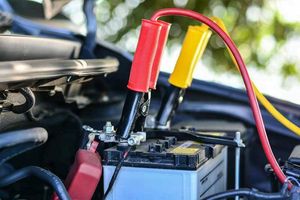
- Power-on Sequence: First, connect the inverter to the battery terminals, ensure it is switched on, and only then plug your appliance into the inverter's outlet.
- No "Male-to-Male" Plugs: Never attempt to feed power from the inverter into your general home grid through a wall outlet. This will cause a fire or equipment failure if the grid power suddenly returns.

In our previous article, we discussed the difference between pure and modified sine waves in detail—be sure to read it before connecting home electronics.
Frequently Asked Questions (FAQ)
Yes, if you use a modern automatic charger and an AGM/GEL type battery. Regular batteries are better charged in well-ventilated, non-residential areas.
To start a refrigerator compressor, you need a pure sine wave inverter with a very high peak power (at least 5-7 times the refrigerator's rated power). Most budget models won't handle this.
Most high-quality inverters emit an audible signal when the voltage drops below 10.5-11V and automatically shut off to prevent irreversible deep discharge.
Conclusion
A car inverter is an effective temporary solution for maintaining communication and lighting at home. The key is to calculate the load correctly and ensure system safety. If you plan to use an inverter to power a boiler or complex household appliances, our consultants will help you choose a model with the correct signal form and the necessary power reserve.