The modern pace of life and potential power outages have turned the car from a mere means of transport into a mobile energy source. A car power inverter (voltage converter) allows you to get the standard 220V (or 110V depending on the region) where there is no power grid, using your car battery's charge.
In this article, we will break down the technical nuances that will help you choose a reliable device without harming your vehicle's electronics or the connected appliances.

Output Signal Type: Pure vs. Modified Sine Wave
This is a key parameter that determines the compatibility of the inverter with your equipment. There are two main types of converters:
- Pure Sine Wave: produces current identical to a standard household wall outlet. It is essential for sensitive electronics: gas boilers, pumps, medical equipment, and high-end laptops.
- Modified Sine Wave: has a simplified signal waveform. Suitable for simple devices without electric motors: incandescent lamps, smartphone chargers, electric kettles.
Inverter Type Comparison
| Feature | Pure Sine Wave | Modified Sine Wave |
|---|---|---|
| Compatibility | All devices | Limited (simple devices only) |
| Device Heating | Minimal | Potential overheating risk |
| Price | Above average | Affordable |
Power Calculation: Rated vs. Peak Power
When choosing a device, it is important to distinguish between two power ratings:
- Rated Power: the load the inverter can handle continuously over a long period.
- Peak (Surge) Power: a short-term burst the device can handle at the moment an appliance (e.g., a refrigerator or compressor) is switched on.
Experts recommend choosing an inverter with a power margin of 20–30% of the total load of your gadgets. This prevents overheating and extends the life of the device.
Connection Methods and Cable Gauge
There are two main ways to connect an inverter to a car's electrical system:
- Via Cigarette Lighter: suitable only for low-power devices (up to 150–200W). The limit is due to the car's factory wiring gauge and fuse rating.
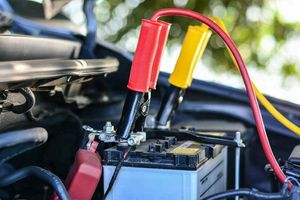
- Directly to Battery Terminals: required for any loads exceeding 200W.
It is crucial to use high-quality copper wires of the appropriate gauge. The longer the cable, the thicker it should be to avoid voltage drops and insulation overheating.

Safety and Protection Systems
A quality converter must have built-in protection systems:
- Short circuit protection;
- Overload protection;
- Overheat sensor with forced cooling (fan);
- Low battery protection (the inverter will alert or shut down if the battery voltage drops below 10.5V).
Frequently Asked Questions (FAQ)
Yes, but only if you use a Pure Sine Wave inverter. For most modern boilers, this is a strict requirement for the electronics and the pump to function.
This depends on the battery capacity. For example, a standard 50W TV can run for 5-10 hours on a fully charged 60Ah battery; however, it's vital to avoid deep discharge so you can still start the engine.
When using high-power consumers (over 300W), it is advisable to periodically start the engine to recharge the battery using the car's alternator.
Conclusion
Choosing a car power inverter depends primarily on your needs: a compact model is enough for charging a laptop, while household appliances require a pure sine wave device connected directly to the battery. If you are unsure whether a chosen model has enough power for your devices, our specialists can help with an accurate calculation and select the optimal option for your vehicle.