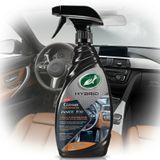
Quick summary: For deep cleaning of dirt buildup on the evaporator coil, use a foam cleaner (sprayed through the drain tube or cabin filter housing). For routine maintenance and removing light odors, an antibacterial aerosol fogger ("AC bomb") is the right choice. After any cleaning procedure, always install a new cabin air filter — otherwise the work was for nothing.
When the first warm days arrive, drivers turn their AC on en masse. Instead of the expected freshness, the cabin fills with the smell of wet socks, mildew, or dust. This is a clear sign that a colony of bacteria and mold has formed on the AC evaporator. Breathing this air is harmful — it leads directly to allergies and respiratory problems.
To fix the problem, you don't need to drive to a service center and pay a technician. The disinfection procedure can be done at home in your garage in about half an hour. The key is to choose the right chemistry and avoid mistakes that can lead to flooded electronics.

Why Your Car AC Smells Musty
According to detailing pros, in 8 out of 10 cases, the unpleasant smell comes from a dirty evaporator. The evaporator is a small radiator hidden deep behind the dashboard. While the AC system runs, its temperature drops to 32-41°F (0...+5°C). Moisture from warm air constantly condenses on the cold aluminum fins.
Along with the air, fine dust passes through the cabin filter. It sticks to the wet evaporator, forming a thin layer of grime. When you shut off the engine and leave the car in the sun, the temperature behind the dashboard climbs rapidly. The result is a perfect incubator: dark, humid, and warm. Bacteria and fungi start multiplying actively. The byproducts of their activity are exactly what creates that sour smell when you start the engine next time.
The second common cause is a clogged drain tube. The condensate that drips from the evaporator should drain outside the car (a puddle under your car in summer is normal). If the tube gets clogged with dust or leaves, water stagnates in the drain pan and literally rots.
Foam Cleaner or AC Bomb: What's the Difference and Which to Choose
Drivers often confuse types of AC cleaning products. There are two main products on the market: foam cleaners and antibacterial aerosols (also called "AC bombs" or "foggers"). They work in fundamentally different ways and serve different purposes.
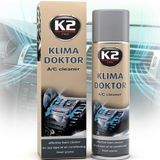
Foam Cleaner. This is a can with a long plastic tube. Inside is aggressive chemistry. When sprayed, it turns into thick foam that expands 30-40 times in volume. The foam coats the evaporator, dissolves physical dirt, turns into liquid, and drains out through the AC drain tube along with all the grime. This is the heavy artillery for older cars or cases where the AC hasn't been cleaned in years.
AC Bomb (Aerosol Fogger). This is a small canister placed inside the cabin. You press the button (it locks down), and the canister continuously releases an antibacterial fog. The AC system runs in recirculation mode, circulating this fog through the ducts. The bomb kills bacteria (often contains Nano Silver ions), leaves a pleasant scent, but does not wash away physical dirt. This is the perfect product for routine maintenance every six months on relatively new cars.
Comparison of Cleaning Methods
| Characteristic | Foam Cleaner | AC Bomb (Aerosol Fogger) |
|---|---|---|
| Main function | Washes away dirt, dust, and mold | Disinfects air, kills microbes |
| Difficulty | Medium (need to find drain or filter housing) | Very easy (press button and walk away) |
| Risk to electronics | High (if sprayed into center vents) | Minimal (dry fog won't short contacts) |
| When to use | Once every 1-2 years if there's strong odor | Every 6 months for prevention |
Not sure what to choose? Browse our car AC cleaning chemistry — the catalog has both powerful foam products and quick aerosol foggers with new car scent.

How to Clean Your Car AC with Foam: Step-by-Step
Working with foam requires care. Your goal is to deliver foam directly to the evaporator, bypassing other interior components. There are two correct paths: through the cabin filter housing or through the drain tube under the car.
Step 1. Remove the old filter. Locate the cabin air filter (most often behind the glove box). Remove the cover, take out the dirty filter, and dispose of it. Never spray foam through the filter — it will just soak it and clog it.
Step 2. Prepare the system. Start the engine, turn the AC to minimum temperature and maximum fan speed for 5 minutes. This creates condensate on the evaporator — a wet surface reacts better with the chemistry. Then turn off the engine.
Step 3. Apply foam. Option A (through the cabin): Insert the long probe into the cabin filter slot, pointing toward the center of the dashboard (where the evaporator sits). Shake the can and spray foam in portions, allowing it to settle. Option B (through the drain): Drive the car onto a ramp. Find the rubber drain tube under the chassis where AC water drips out. Insert the probe all the way in and spray foam from below upward. This method is considered safest for electronics.
Step 4. Chemical reaction. Leave the car for 15-20 minutes. During this time, foam will collapse, turn into dirty liquid, and start draining through the AC drain tube. Place a container under the drain — if the liquid is black or greenish, the cleaning was definitely needed.
Step 5. Drying the system. Start the engine. Turn the heater (heat) to maximum temperature, fan to maximum, recirculation mode on. Open all car doors. Let the car run like this for 10 minutes. This dries the evaporator and flushes out chemical residue. Only after this should you install a new cabin air filter.
How to Use an AC Bomb for Routine Maintenance
If you maintain your car regularly and only notice a slight musty smell, the AC bomb is your best choice. The procedure takes minimal time and requires no ramp or tools.
- Preparation: Remove the old cabin filter and close the filter housing empty. This allows fog to circulate freely through the system.
- Climate setup: Start the engine. Turn on AC, temperature to minimum, fan to maximum. Be sure to enable recirculation mode (drawing air from the cabin, not from outside). Direct airflow to "face" vents.
- Position the bomb: Slide the front passenger seat all the way forward. Place the canister on the floor behind it (or in the front passenger footwell — the recirculation air intake is usually located there).
- Activation: Press the canister valve until it locks. A strong stream of fog will start flowing. Immediately exit the car and close all doors and windows.
- Wait: The system should circulate fog for 10-15 minutes until the canister empties and the product settles on the duct walls.
- Ventilation: Open all doors and ventilate the cabin for another 10 minutes with the fan still running. Install a new filter.
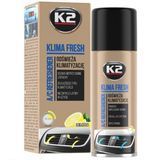
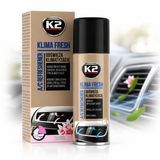
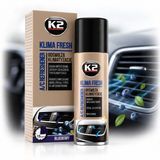
Need a quality AC bomb? Take a look at K2 Klima Fresh AC Cleaner Spray with silver nanoparticles. It blocks bacteria growth for the entire summer season.
Common Mistakes During DIY AC Cleaning
Practice shows that the desire to do everything quickly often leads to expensive repairs. Here are the three main rules of what NOT to do when working with foam.
Spraying foam into center vents. This is the most expensive mistake. Many drivers see videos where foam is sprayed directly into the dashboard vents. Categorically don't do this. Air ducts in modern cars are not airtight (they have seams). Foam turns to liquid, leaks through the gaps, and lands directly on the head unit board or climate control module. Repair costs hundreds of dollars.
Ignoring the drain tube. If the drain is clogged with dirt, foam has nowhere to go. Liquid accumulates in the evaporator pan and at the first turn pours straight onto the passenger floor mat. Before applying foam, make sure condensate drips normally under the car.
Insufficient drying. If you don't run the heater on maximum after cleaning, chemical residue mixes with new condensate. Chemical odor in the cabin will linger for weeks, causing headaches.
Why Cleaning Won't Work Without Replacing the Cabin Filter
The cabin air filter is the barrier that takes the full hit of street dust, pollen, and insects. If you spent time cleaning the evaporator but kept the old filter, you just threw your money away.
An old paper filter is already home to millions of bacteria. As soon as you turn on the fan, they immediately fly onto your freshly cleaned evaporator. Always buy a new filter before the procedure. Choose a carbon filter — it additionally absorbs exhaust gas odors from outside.
Frequently Asked Questions (FAQ)
Can I use household chlorhexidine instead of dedicated AC cleaner?
Technically chlorhexidine kills bacteria. Some drivers pour it into a sprayer and mist it into the air intake. However, household solution has low concentration and works like water — it doesn't produce foam and won't wash physical dirt off the evaporator. The effect lasts maybe a few days at best. Professional automotive chemistry contains surfactants that break down dirt, plus binders that hold the product on the vertical fins of the evaporator.
How often should I clean the AC in my car?
According to manufacturer recommendations, disinfection (with a bomb or light spray) should be done once a year, ideally in spring before the active use season. Deep cleaning with foam is recommended once every 2-3 years, or whenever there's a noticeable musty smell.
What if dirty water doesn't drain after using foam?
If it's dry under the car, it means the drain channel is clogged. The dirty liquid is now sitting in the evaporator pan inside the cabin. Don't turn the fan to high speed. You need to find the drain tube under the car and carefully clean it with a flexible plastic tie or blow it out with compressed air. Once the clog clears, water will pour out.
Does an AC bomb kill mold deep in the air ducts?
An AC bomb (aerosol fog) handles bacteria perfectly on surfaces where fog can circulate. But it cannot dissolve a thick layer of dirt or break through dense mold buildup on the evaporator itself. For neglected cases, the bomb is ineffective — only a foam cleaner can physically wash the dirt away.