In brief: a model name alone is not enough when ordering mats for a BYD, Zeekr or another car imported from China. First confirm the make, exact sales name and any Chinese-market alias, production year, generation or facelift, body style, steering position, number of seat rows, floor shape, factory retainers and set contents. Powertrain and trim matter only when the seller uses them to distinguish one template from another. The safe order is simple: identify the exact vehicle and floor outline first, then choose the mat material and finish.
This has become more relevant in Ukraine. According to the Institute for Car Market Research, 2,596 new China-built passenger cars received their first Ukrainian registration in the second quarter of 2026, representing 15.7% of new imported cars. That was 25.4% more than in the first quarter but 31.5% fewer than a year earlier. BYD accounted for 1,037 registrations and Zeekr for 261; battery-electric cars represented 48.7% and hybrids 28.9%. A more varied fleet and parallel imports create more opportunities to order by a familiar name but select the wrong model year, body or floor version.
Why one model can have more than one mat template
The model name is only the first checkpoint. A car may be sold under related or different names in different markets, while a model-year update can alter the retainers, left-foot rest, centre tunnel or outline around the seats. This does not mean every update definitely changes the mat. It means the match must be confirmed in the product listing or by the seller rather than assumed.
- Production year and model year. A car first registered in 2026 may have been built in 2025. The vehicle data and the year range in the listing both matter.
- Generation and facelift. The same model name before and after an update does not guarantee an identical floor.
- Body and seat rows. A saloon, liftback, crossover, long-wheelbase version or third row may need a different cabin or boot set.
- Market and steering position. Left-hand-drive and right-hand-drive driver mats differ, so the vehicle’s market origin must be clear.
- Powertrain and trim. A battery-electric car, plug-in hybrid and range-extended hybrid should not automatically be treated as identical or different underneath. Use this detail only with confirmation of the exact template.
- Boot layout. An upper or lower false floor, subwoofer, third row or storage well can change the boot-mat outline.
What to check and where to find it
| Detail to check | Where to find it | Why it affects the order |
|---|---|---|
| Make and exact model | Registration certificate, VIN lookup, vehicle badge or car menu | Separates similar names and market aliases |
| Production and model year | Documents, VIN and factory label, not only first-registration date | Matches the vehicle to the listing’s correct year range |
| Generation, facelift and body | Vehicle record, official range or seller confirmation | Defines the outline by the sill, tunnel and seat rails |
| Left- or right-hand drive | The actual vehicle configuration | Driver and passenger mats are not interchangeable |
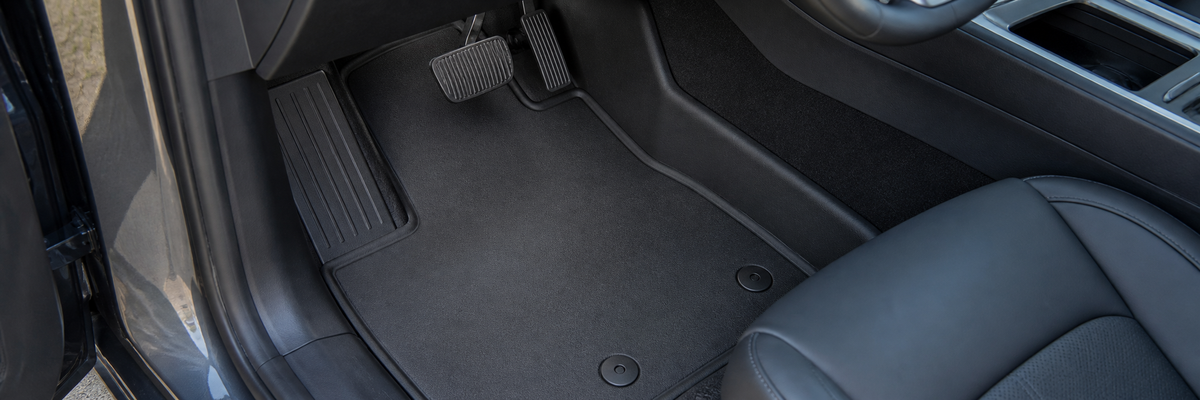
| Floor shape and retainers | Photo of the driver’s footwell with the old mat removed | Confirms holes, stops and safe pedal clearance |
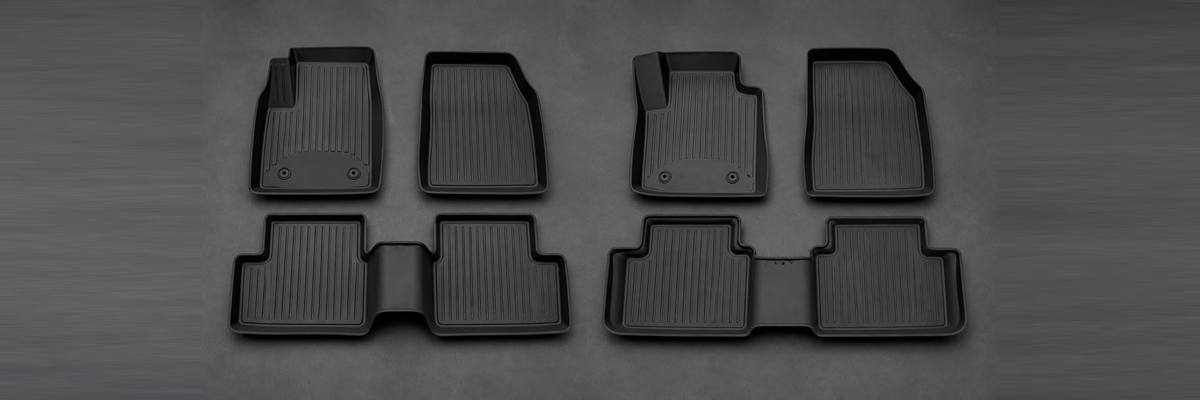
| Seat rows and rear tunnel | Cabin photos and the actual seating layout | Determines the number of pieces and whether a bridge is included |
| Boot-floor level | Photo of the empty boot with the floor in its normal position | Prevents ordering an upper-floor mat for a lower-floor layout |
| Set contents | Product title and specification | Distinguishes driver, front, full cabin, third-row and boot options |
A VIN helps confirm the registered make, model and year, but it does not replace a floor photo. When sending information to a seller, hide your name, address, document number and other personal details. The VIN or an agreed portion of it, the vehicle specification and clear photos of the installation areas are normally sufficient.
Which catalogue route fits your situation
| Buyer situation | Where to start | What to confirm before paying |
|---|---|---|
| The exact make and model are known | Open the brand category and find the applicable year range | Body, generation, steering position, retainers and piece count |
| The car arrived through parallel import | Compare the VIN, Chinese-market name and export name | The real floor against the template photo or diagram |
| Only a boot mat or third row is needed | Search for that specific format, not a full cabin set | False-floor level, number of rows and actual set contents |
| The exact model is absent from the filter | Do not choose a neighbouring model from a similar photo | Ask about made-to-order options or request a manual fitment check |
For a broad search, start with tailored cabin and boot mats. When the make is known, use the closest commercial route: mats for BYD, mats for Zeekr, mats for Xpeng or mats for Avatr. Public categories are also confirmed for Denza and Xiaomi. If the correct model or year is missing, request a manual check instead of ordering a visually similar substitute.
Compatibility check before ordering
- Write down the make, full model name and alternative market name if one is used.
- Provide the production year; add the model year and first-registration date separately when they differ.
- Confirm the generation, facelift, body and left- or right-hand-drive layout.
- State the powertrain and trim only as additional identifiers, and ask whether the product listing genuinely separates templates by those details.
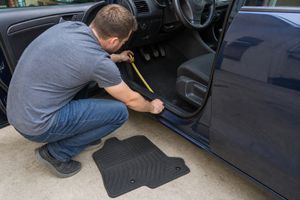
- Take a top-down photo of the empty driver’s footwell showing the sill, foot rest, tunnel, seat rails, retainers and pedals in one frame.
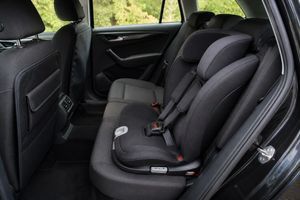
- For the rear row, show the tunnel and rail edges. For a three-row car, ask which rows are included in the set.
- For the boot, photograph the empty compartment with the floor at the level you normally use and identify any third row or storage well.
- Confirm material, colour, edging and heel pad only after the template and set contents have been approved.
What to inspect after delivery
Test-fit the mats on a clean, dry floor before use. There must be only one mat in the driver’s footwell: leaving the old mat underneath weakens retention and raises the surface near the pedals. Engage the factory retainers, flatten the outline and, with the car switched off, check the full travel of every pedal by hand. No edge should curl, sit under a pedal or catch footwear, a seat rail or the door seal.
At the rear, check the tunnel bridge and make sure the seats can still move freely. In the boot, confirm that the mat does not cover the latch, hinges, false-floor access or cargo tie-down points. If the shape or retainers do not match, do not trim the driver mat or start using it. Photograph the mismatch and agree an exchange first.
Common selection mistakes
- Ordering from the word “BYD” or “Zeekr” without the model and year range.
- Treating the first-registration year as the production year without checking.
- Ignoring a facelift, body, steering position, third row or boot-floor level.
- Assuming electric and hybrid versions use the same mats when the listing does not confirm it.
- Confusing a full cabin set, front pair, driver piece and boot mat.
- Choosing from a vehicle photo or a folded mat without checking the retainers.
- Placing a new driver mat over an old one or trimming it near the pedals.
- Sending an uncensored registration document when technical details alone are sufficient.
Pre-payment checklist
- the make, exact model and possible alternative name are recorded;
- the production year has not been confused with first registration;
- generation, facelift, body and steering position are confirmed;
- powertrain and trim are stated without assumptions;
- the driver-floor, retainer and pedal-zone photo was taken with the old mat removed;
- seat rows, rear bridge and boot-floor level have been checked;
- set contents, material, colour, edging and heel pad are listed separately;
- the seller has confirmed compatibility with the exact vehicle version;
- personal data is hidden on any document image you send.
Fact sources: the Ukrainian car-market review for the second quarter of 2026 and the Main Service Centre of Ukraine’s Ministry of Internal Affairs guidance on VINs. Market data explains why the issue is timely, but it does not replace an individual compatibility check.
FAQ
Is a VIN enough to guarantee that the mats will fit?
No. A VIN helps identify the vehicle, but the seller may still need the generation, body, steering position, trim and clear floor photos showing the retainers. The match is confirmed only when a specific template is approved for those details.
Which year should I provide: production or first registration?
Provide the production year first. Add the model year if it is known, and state the first-registration date separately. Do not substitute one for another, particularly when the car was imported several months after it was built.
What if the same vehicle appears under two model names?
Give the seller both names, the VIN, market of origin and year, together with a driver-footwell photo. Do not select by the more familiar name alone; confirm that both names refer to the same floor geometry.
Are mats identical for electric and hybrid versions?
Sometimes they are and sometimes they are not. The powertrain alone proves neither a match nor a difference. Use only a product whose listing or seller explicitly confirms your model, year, body and powertrain.
Can I trim a universal mat near the pedals?
An exact tailored template is safer for the driver’s footwell. Trimming can leave an unstable edge and does not solve missing retainers. A mat that can move or interfere with a pedal must not be used.